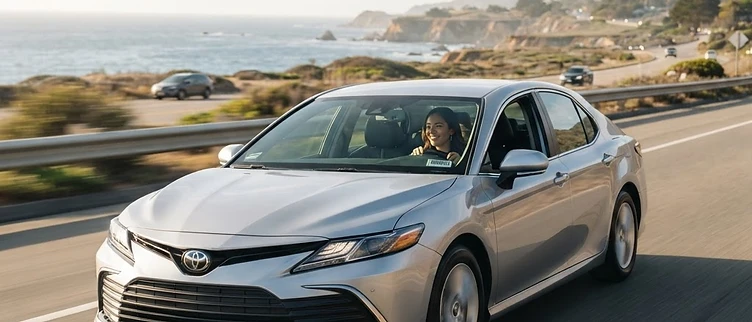
Wondering if you should buy a former rental car in Wichita? It can be a smart deal if you know how to inspect the condition and price it correctly.
Andrew Woods September 18, 2026
You're looking at a used car that checks a lot of boxes.
Good price.
Reasonable mileage.
Clean interior.
The right features.
Then you look at the vehicle history report and see:
Rental vehicle.
Now what?
A lot of shoppers immediately get nervous when they discover a used car spent part of its life in a rental fleet.
And I understand why.
You don't exactly picture every rental customer gently warming up the engine, avoiding potholes and lovingly hand-washing the car every Sunday afternoon.
But does that mean you should automatically avoid a former rental car?
No.
It does mean you should know what you're looking at.
Quick Answer
A former rental car can absolutely be worth buying if its current condition, maintenance history and price make sense.
I wouldn't automatically reject a car because it was previously a rental.
I also wouldn't ignore that history.
Instead, I'd pay particular attention to:
Current mechanical condition
Maintenance history
Tires and brakes
Interior wear
Exterior damage and previous repairs
Mileage
Vehicle history
How the car drives
Remaining factory warranty, if applicable
Price compared with similar non-rental vehicles
The most important thing to remember is this:
You're buying the car as it exists today—not the story you imagine about how it was driven three years ago.
Inspect the actual vehicle.
Why Are There So Many Former Rental Cars for Sale?
Rental companies operate large fleets of vehicles.
Eventually those vehicles need to be replaced, and the older cars enter the used-car market.
That means it's completely normal to find relatively new used cars that have previous rental history.
You might see vehicles that are only a year or two old but already have considerably more mileage than you'd expect from a typical privately owned vehicle.
That isn't automatically bad.
A car accumulating 30,000 miles quickly may have spent a significant amount of time on highways rather than making thousands of short trips.
Mileage tells you how far a vehicle traveled.
It doesn't tell you the entire story of how it got there.
The Big Concern: "People Beat Up Rental Cars"
Let's address the elephant in the rental-car parking lot.
Yes, some people drive rental cars harder than they drive their own vehicles.
The person who rented your future Nissan Altima for a weekend probably wasn't emotionally invested in preserving its resale value.
But it's also easy to exaggerate this.
Not every rental vehicle spent its life reenacting a scene from The Fast and the Furious.
A lot of rental-car use is incredibly boring:
Airport.
Hotel.
Meeting.
Restaurant.
Hotel.
Airport.
That's why I wouldn't make my decision based on stereotypes about rental drivers.
I'd look for evidence of actual abuse or neglect.
That's much more useful.
Start With the Vehicle History
If you already know the car was a rental, the vehicle history report can give you additional context.
Look at:
Reported ownership history
Mileage progression
Maintenance records when available
Accident or damage reports
Title history
Where the vehicle was registered
How long it remained in rental service
Remember that a vehicle history report isn't a perfect record of everything that's ever happened to a car.
A clean report doesn't guarantee that the vehicle has never been damaged.
Use the history report as one tool—not as a substitute for inspecting the car.
Look Closely at the Maintenance History
Rental companies have a strong incentive to keep their vehicles operational.
A car sitting broken isn't generating rental revenue.
But that doesn't mean you should simply assume every maintenance item was performed exactly when and how you'd prefer.
Look for available service records.
Depending on the age and mileage of the vehicle, I'd want to know about things such as:
Oil changes
Tire replacement
Brake service
Filters
Fluid services
Manufacturer-recommended maintenance
If the car has 50,000 miles, look at what the manufacturer recommends by that mileage and see what may be coming soon.
This applies to any used vehicle, but it's especially useful when a relatively young former rental has accumulated miles quickly.
Pay Attention to the Tires
Don't just kick them.
Actually look.
Rental vehicles may accumulate a lot of mileage in a relatively short period, so tire condition matters.
Check:
Remaining tread
Uneven wear
Sidewall damage
Whether all four tires match
Tire age
Signs of poor alignment
If the vehicle has four different tires from four different manufacturers, I'd want to know why.
That doesn't automatically make the car bad, but it's information.
Also remember that a car advertised at an attractive price isn't quite as attractive if you're going to need $900 worth of tires immediately.
Check the Brakes
Same idea.
A former rental may have seen a lot of different drivers with very different braking habits.
Pay attention during the test drive.
Listen and feel for:
Grinding
Squealing
Pulsation
Vibration
Pulling under braking
Unusual pedal feel
If you're seriously considering the vehicle, an inspection can give you a much better idea of how much brake life remains.
A car needing brakes isn't necessarily a bad car.
You just want to know about it before you decide what it's worth.
Inspect the Interior More Carefully Than Usual
This is one area where rental use can show.
A privately owned two-year-old vehicle might have had one driver.
A rental vehicle could have had hundreds.
Take a close look at the high-touch areas:
Driver's seat
Steering wheel
Buttons
Touchscreen
Center console
Door panels
Carpet
Cargo area
USB ports
Cupholders
Test everything.
Does the touchscreen work properly?
Does your phone connect?
Do all the windows operate?
Do the power seats work?
Does the air conditioning blow cold?
Are there strange smells?
And yes, smell matters.
If somebody tried to cover cigarette smoke with enough air freshener to make the car smell like a tropical rainforest, you're probably going to notice eventually.
Look for Cosmetic Repairs
Rental vehicles live busy lives.
Parking lots.
Airports.
Hotels.
Luggage.
Shopping carts.
Curbs that apparently appeared out of nowhere.
Minor cosmetic damage isn't surprising.
Look closely for:
Scratches
Dents
Wheel damage
Bumper repairs
Paint differences
Panel alignment
Cracked or chipped glass
Damaged trim
Again, none of these automatically means you should walk away.
A professionally repaired bumper doesn't make a car mechanically bad.
You just want the condition and price to match.
The Test Drive Matters
Don't let the vehicle history report make the entire decision for you.
Drive the car.
And don't just circle the parking lot.
If possible, experience it in several situations:
City streets
Highway speeds
Acceleration
Braking
Turns
Rougher pavement
Parking
Pay attention to:
Steering
Alignment
Transmission behavior
Engine performance
Suspension noises
Vibrations
Wind noise
Warning lights
Turn the radio off for part of the drive.
I know.
Terrifying.
But it's much easier to hear a wheel bearing or suspension noise without Luke Combs providing the soundtrack.
Consider an Independent Pre-Purchase Inspection
If you're concerned about the rental history, this can be one of the smartest things you do.
Have a qualified independent mechanic inspect the vehicle before you buy it when practical.
Tell them it's a former rental and that you're considering purchasing it.
An inspection may uncover things you couldn't easily identify yourself, such as:
Fluid leaks
Suspension wear
Brake condition
Tire problems
Previous repairs
Undercarriage damage
Diagnostic trouble codes
Other mechanical concerns
An inspection can't guarantee that nothing will ever break.
No mechanic owns a time machine.
But it can give you considerably more information about the car you're buying today.
Is Higher Mileage on a Former Rental Bad?
Not automatically.
This is where people sometimes get too focused on the odometer.
Imagine two three-year-old cars.
Car A: 28,000 miles, privately owned
Car B: 55,000 miles, former rental
Car A will probably be worth more, all else being equal.
But that doesn't automatically mean it's the better purchase.
What if Car B:
Has been maintained properly
Drives beautifully
Has good tires and brakes
Passes an inspection
Costs $4,000 less
Now we have an actual decision to make.
Mileage should affect the vehicle's value.
It shouldn't automatically determine whether the vehicle is good or bad.
Check the Remaining Factory Warranty
If you're looking at a relatively new former rental, check whether any original manufacturer warranty remains.
Pay attention to both:
Time
and
Mileage.
This matters because rental vehicles can accumulate miles quickly.
A two-year-old car might sound almost new, but if it already has 55,000 miles, some mileage-limited factory coverage may be much closer to expiration than you'd expect.
Don't assume:
"It's only two years old, so it must have tons of warranty left."
Look up the actual coverage for that particular make and model.
What About Resale Value?
Previous rental history may affect how future buyers evaluate the vehicle.
You noticed the rental history.
The next buyer probably can too.
That doesn't mean you'll never be able to sell or trade the car.
It means the purchase price should make sense relative to its history, mileage and condition.
This is the same basic principle I use with almost any characteristic that affects a used vehicle's value:
If something makes a car worth less when you sell it, you should consider whether you're receiving enough of that discount when you buy it.
Don't pay a premium price and then act surprised when the next buyer cares about the same history you ignored.
One Potential Advantage: Price
This is where former rental vehicles can become interesting.
If buyers are less interested in rental history, a former rental may sometimes be priced more aggressively than a comparable privately owned vehicle.
Suppose you're comparing:
Vehicle A: $25,500
Private ownership
32,000 miles
Vehicle B: $22,900
Former rental
45,000 miles
Same year.
Same trim.
Similar equipment.
Vehicle B isn't automatically the better deal because it's $2,600 cheaper.
It has more mileage and different history.
But it also isn't automatically a bad deal because it says "rental" on the history report.
Now you evaluate the cars.
What condition are they in?
What maintenance has been done?
How are the tires?
How are the brakes?
Do both drive well?
What warranty remains?
How long are you planning to keep the vehicle?
That's how I'd make the decision.
Who Should Consider a Former Rental?
I think a former rental can make a lot of sense for someone who:
Wants a newer vehicle at a potentially lower price
Isn't bothered by higher-than-average mileage
Plans to keep the vehicle for a while
Is willing to inspect the car carefully
Cares more about mechanical condition than previous ownership type
Finds an example with good maintenance and condition
If you're planning to drive the car for another eight years, the fact that it spent its first year or two as a rental may become less important over time.
Who Might Want to Avoid One?
I'd be more hesitant if:
You want the lowest-mileage example possible
Resale value in the near future is extremely important
The vehicle shows obvious signs of hard use
Maintenance history is questionable
It needs significant immediate maintenance
There is unexplained damage
The price isn't meaningfully attractive compared with other options
An inspection reveals problems
And there's nothing wrong with simply saying rental history bothers you.
It's your money.
If you'll spend the entire ownership period wondering whether someone launched the car over a railroad crossing in 2024, buy something else.
Questions to Ask Before Buying a Former Rental
If you're considering one, here's what I'd want to know:
How long was it used as a rental?
What maintenance records are available?
Has it had any reported accidents or damage?
Has any body or paint work been performed?
How much factory warranty remains?
How much life is left in the tires?
How much life is left in the brakes?
Is any major scheduled maintenance coming soon?
Can I have it independently inspected?
How does its price compare with similar non-rental vehicles?
You don't need a perfect answer to every question.
You're trying to build a complete picture of the car.
Don't Judge the Label. Judge the Vehicle.
This is really the point I want to leave you with.
A former rental car isn't automatically a bad car.
A one-owner personal vehicle isn't automatically a good car.
I've seen shoppers get way too comfortable with phrases like:
"One owner."
"Low miles."
"Clean history."
Those things can be positives.
They aren't substitutes for condition.
The same is true in reverse.
"Former rental" is something you should know about and consider.
It isn't a diagnosis.
Bottom Line
Yes, you should consider a former rental car if the vehicle itself makes sense.
Don't automatically eliminate it.
But don't ignore the history either.
Check the maintenance.
Inspect the tires and brakes.
Look closely at the interior and exterior.
Review the vehicle history.
Find out how much factory warranty remains.
Take a real test drive.
And if you want more confidence, get an independent pre-purchase inspection.
Most importantly, compare the price with what you're actually getting.
A well-maintained former rental at the right price can be a perfectly reasonable used-car purchase.
A worn-out former rental with questionable history isn't suddenly a bargain because it's $1,500 cheaper.
Buy the car, not the label attached to its previous owner.
If you're looking at a former rental and aren't sure whether the price, mileage and condition make sense, send it to me through Send Me a Car. I'll help you look at the vehicle itself and figure out whether it's worth pursuing.
Frequently asked
Are all rental cars driven poorly?
Not necessarily. While some drivers are hard on rentals, many are just used for standard commuting and airport trips.
What is the biggest risk with buying a former rental?
The main risk is hidden wear and tear from frequent, different drivers. Always perform a thorough inspection or get a pre-purchase inspection.
Does rental history hurt resale value?
Yes, it often impacts resale value because future buyers will also be aware of the vehicle's past. Ensure the purchase price accounts for this.
Should I care about higher mileage on a rental?
Mileage matters, but context is key. Rental cars often rack up highway miles quickly, which is less stressful than short city trips.
AW
Andrew Woods
Car salesperson in Wichita, Kansas. I built this resource to help local buyers make confident decisions.