I sell Hondas for a living, so you should probably take everything I'm about to say with a grain of salt.
But I also spend every day around people trading cars from just about every manufacturer you can think of.
And there's something different about Honda people.
Someone will come in driving a 2008 Accord with 240,000 miles and talk about it like it's a member of the family.
Civic owners buy another Civic.
CR-V owners replace their CR-V with another CR-V.
Someone who had an Accord 15 years ago will come in and tell me how much they regret selling it.
And then there are the other Honda people.
The ones who can tell you the difference between a B16, K20 and K24 before you've finished asking the question.
So what is it?
What makes Hondas so special?
I think the answer is actually pretty simple.
Honda Is Really, Really Good at the Basics
That's the thing I think Honda does better than almost anybody.
The basics.
A Honda usually isn't trying to overwhelm you with the most ridiculous screen, the craziest horsepower number or 47 features you'll use twice and forget exist.
Instead, Honda tends to obsess over the things you're going to interact with every single day.
How does it drive?
How does the steering feel?
Can you see out of it?
Are the controls where you'd expect them to be?
Is there enough room?
Does it get good fuel economy?
Does the powertrain make sense?
Can you live with it for the next ten years?
None of that sounds particularly exciting.
And that's kind of the point.
Building a good car isn't always about doing something spectacular.
Sometimes it's about doing a thousand boring things correctly.
Sit in a Civic and You'll Understand What I Mean
A Civic is a perfect example.
On paper, it's a compact economy car.
That's not exactly the description of something you'd expect people to be passionate about.
But drive one.
The steering is good.
The chassis is good.
The visibility is good.
The interior makes sense.
There's more room than you'd expect.
It doesn't feel like Honda punished you for buying the smaller, less expensive car.
And that's been part of the Civic's personality for generations.
It's practical transportation that still feels like somebody involved in developing it actually enjoys driving.
That matters.
Honda Is an Engine Company That Happens to Build Cars
If you really want to understand Honda, look beyond cars.
Honda has built:
Motorcycles.
Generators.
Lawn equipment.
Marine engines.
Race engines.
And, obviously, automobile engines.
Honda's identity has always been deeply connected to engineering.
That's how you end up with things like VTEC.
The basic idea behind VTEC was brilliant: create an engine that could behave one way at lower engine speeds and another way when you wanted performance.
The result helped Honda build engines that could be perfectly happy driving to work and then completely change personality when you revved them out.
And if you've ever driven an older performance Honda and deliberately waited for VTEC to kick in...
You get it.
Honda Has Always Been a Little Weird
This might actually be my favorite thing about the company.
Honda can be extremely sensible.
And then, every once in a while, Honda engineers apparently get bored.
This is the same company responsible for the Accord and CR-V...
...that also decided the world needed the S2000.
And the NSX.
And the Civic Type R.
Think about the original NSX for a second.
Honda looked at the exotic sports-car world and basically said:
"What if an exotic car actually worked every day?"
That's such a Honda idea.
Make it exciting.
But make it usable.
That philosophy shows up all over the brand.
Even the Ridiculous Hondas Still Have to Be Hondas
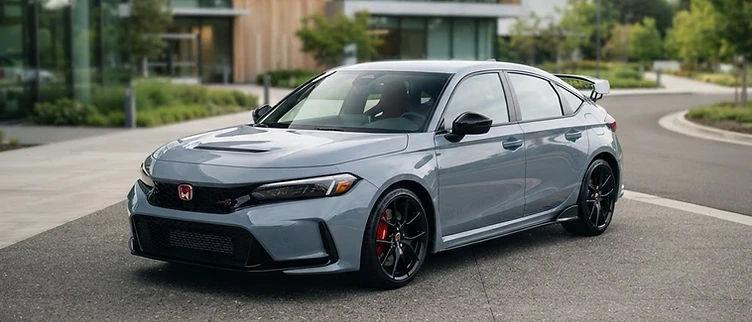
Look at the Civic Type R.
It's completely ridiculous.
Big wing.
Aggressive bodywork.
Massive performance.
Manual transmission.
It's the kind of car that looks like it should make absolutely no sense as transportation.
And yet...
It has four doors.
A big hatch.
Actual rear seats.
You can see out of it.
You can drive it to work.
You can put groceries in it.
Then you can take it to a racetrack.
That combination is very Honda.
The engineers are allowed to have fun.
They just aren't allowed to forget that somebody still has to live with the thing.
Honda's History Is Full of Engineering Problems Nobody Asked Them to Solve
One of my favorite examples goes all the way back to the early Civic.
In the 1970s, automakers were dealing with much stricter emissions requirements.
Honda developed an engine technology called CVCC.
Without turning this article into an engineering textbook, Honda found a clever way to control combustion inside the engine and meet extremely tough emissions requirements of the era.
That technology helped put the Civic—and Honda itself—on the map in America.
And I think that story tells you something about the company's personality.
Honda has always seemed to enjoy being handed an engineering problem and responding:
"Okay. We'll figure it out."
Then There's VTEC
If CVCC helped establish Honda as a serious automaker, VTEC helped create an entire generation of Honda nerds.
And I use "Honda nerds" lovingly.
Honda engineers wanted an engine that could combine everyday drivability with high-rpm performance.
That eventually led to VTEC: variable valve timing and lift technology that could change how the engine breathed depending on how it was being driven.
In normal driving?
Civilized.
Keep your foot in it and let the engine rev?
Different animal.
Today, variable valve technology isn't unusual.
But VTEC became more than technology.
It became part of Honda culture.
There's a reason people still joke about:
"VTEC just kicked in."
Thirty-something years later.
Hondas Often Feel Better Than Their Numbers Suggest
This is something spec sheets struggle to explain.
You can compare:
Horsepower.
Torque.
0–60 times.
Screen sizes.
Cargo volume.
Fuel economy.
Those numbers matter.
But they don't tell you whether a car feels good.
Honda has traditionally been very good at making relatively normal vehicles enjoyable to operate.
A Civic doesn't need 400 horsepower to be fun.
An Accord doesn't need to pretend it's a sports car.
A CR-V doesn't need to pretend it's climbing Mount Everest every morning.
They're just... good to drive.
Steering.
Pedal feel.
Visibility.
Suspension.
Driving position.
Controls.
All of the little things add up.
That's one of those things that's hard to understand until you actually drive one.
Honda Doesn't Usually Reinvent a Car Just to Say It Reinvented It
There's something to be said for evolution.
The Civic has been around for generations.
So has the Accord.
Honda doesn't have to rediscover what a Civic is every few years.
It can refine it.
Make it quieter.
Make it safer.
Make it more efficient.
Improve the chassis.
Improve the interior.
Improve the powertrain.
Fix things customers didn't like.
Keep things that worked.
That sounds boring.
But if you're trying to build a car somebody will own for the next decade, boring development decisions can produce really good vehicles.
Reliability Is Part of It—But I Don't Like Saying "Hondas Never Break"
You'll hear this all the time:
"Hondas run forever."
Some of them certainly seem determined to try.
But let's be realistic.
Hondas are machines.
Machines break.
A Honda can need:
Brakes.
Suspension.
Air conditioning.
Sensors.
Gaskets.
Electronics.
Transmission work.
Engine repairs.
Maintenance still matters.
Previous ownership matters.
The particular year and model matter.
I would never tell somebody to buy a neglected Honda with 180,000 miles just because there's an H on the hood.
But Honda has built a long-standing reputation for durable, practical vehicles, and that reputation is a huge part of why people keep coming back.
The important part is understanding why longevity happens.
Good engineering helps.
Good maintenance helps too.
The Cars Tend to Age Well
And I don't only mean mechanically.
Go sit inside a well-kept older Accord.
A lot of the controls still make sense.
The seating position still works.
Visibility is usually good.
The design often doesn't feel completely ridiculous 10 or 15 years later.
That's valuable.
Because most people don't own cars for 18 months.
They live with them.
They spill coffee in them.
They drive to work.
They put kids in them.
They take road trips.
They rack up 100,000 miles.
A great car needs to survive normal life without becoming miserable to use.
Honda seems to understand that.
They Make Cars for Actual Humans
This is another theme you'll notice when you spend time in different Hondas.
Honda is very good at packaging.
Basically:
How much useful stuff can we fit into this amount of vehicle?
Look at something like the CR-V.
It's not enormous.
But it makes extremely good use of its space.
The Civic is the same way.
The Odyssey takes that philosophy to its logical conclusion and basically says:
"Fine. Bring your children, their friends, luggage, snacks, sports equipment and half your house."
Honda engineers seem to spend a lot of time thinking about how people actually use vehicles.
Cupholders aren't exciting.
Cargo openings aren't exciting.
Rear-seat legroom isn't exciting.
Until you live with the car.
Then they're extremely exciting.
Honda Doesn't Try to Make Every Vehicle the Same
This is something else I appreciate.
A Civic feels like a Civic.
An Accord feels like an Accord.
A CR-V is trying to be a great everyday crossover.
A Pilot is trying to move a family.
A Ridgeline approaches the midsize-truck formula differently from a traditional body-on-frame pickup.
And a Type R is completely unhinged by comparison.
There is a family resemblance between them.
But Honda doesn't need every vehicle to have exactly the same personality.
The Hybrids Are Very Honda
Honda's modern hybrids are another example of the company's philosophy.
The goal isn't simply:
"Look! It's a hybrid!"
The electrification is integrated into a vehicle that's still supposed to function like a normal Civic, Accord or CR-V.
You get efficiency.
You get strong everyday performance.
And you don't have to completely relearn how to own a car.
That's a very Honda approach to technology.
The technology is supposed to make the vehicle better.
The technology isn't supposed to be the entire personality of the vehicle.
Honda Has One of the Strangest Fan Bases in the Car Industry
I mean that as a compliment.
There's the person who buys a CR-V because they want something dependable and practical.
There's the family that's on its third Odyssey.
There's the commuter who has driven Accords for 20 years.
And then there's somebody in their garage at 1:00 in the morning figuring out how to put a completely different Honda engine into a 1997 Civic.
Somehow they're all Honda people.
Not many brands can pull that off.
Honda built practical cars that normal people liked.
Then enthusiasts discovered that many of those same cars were lightweight, fun, mechanically interesting and incredibly receptive to modification.
That created an entire culture.
And That's Why the Type R Matters So Much
The Civic Type R is basically the intersection of the two Hondas.
There's sensible Honda:
Civic.
Practical.
Efficient.
Roomy.
Easy to live with.
Then there's crazy engineer Honda:
Let's give it over 300 horsepower, a manual transmission, huge brakes, serious suspension and make it capable of embarrassing dedicated sports cars.
Put them together.
Type R.
It's absurd.
And somehow completely logical.
But Are Hondas Automatically the Best Cars?
No.
And I sell them.
There are situations where I'd recommend something else.
Maybe another manufacturer makes the exact feature combination you want.
Maybe you need a type of vehicle Honda doesn't build.
Maybe you prefer another vehicle's styling.
Maybe another model fits your budget better.
Maybe you simply drive something else and like it more.
That's okay.
Buying a car shouldn't be about proving loyalty to a logo.
You should buy the vehicle that fits your needs.
But if you've ever wondered why Honda has such a loyal following, I think it comes down to something deeper than one feature or one reliability statistic.
Honda Understands What a Car Is Supposed to Do
A car has to start every morning.
It has to carry your stuff.
It has to be comfortable.
It should be efficient.
The controls should make sense.
It should be pleasant to drive.
It should survive years of normal use.
And, if possible...
it should have a little personality.
Honda has spent decades getting those fundamentals right.
Not perfectly.
No manufacturer does.
But consistently enough that generations of people have bought a Civic, Accord, CR-V, Odyssey or another Honda...
...and when it finally came time to replace it, they walked right back into a Honda dealership.
Bottom Line
So what makes Hondas special?
I don't think it's one thing.
It's not just reliability.
It's not just VTEC.
It's not just fuel economy.
It's not just resale value.
It's not just racing.
It's the combination.
Honda just does the basics extremely well.
Then every once in a while, the same company responsible for building your neighbor's perfectly sensible CR-V lets a bunch of engineers loose and we end up with something like an NSX, S2000 or Civic Type R.
And I think that's the secret.
Honda has figured out how to make cars for people who don't care about cars...
without forgetting about the people who absolutely love them.
If you've never understood why people get so attached to Hondas, come drive one.
I can explain it all day.
I'd rather let the car do it.